The Realities of Fairness: Navigating Facticity in an Unequal World
- Dick Gariepy
- Dec 4, 2025
- 5 min read

Dick Gariepy | Big Thinky Ouchey

I live in a world where fairness is merely decorative.
The elites display fairness as a sign of their high status. It's lavish, esteemed, meticulously managed, and protected by private security. Fairness sits atop their pedestal, a virtue shining brighter than any diamond. Something held so tightly by the stewards of our society surely must be an unqualified good, accessible to all.
I accepted this as true until I needed it and was denied.

"Life isn't fair," they shouted at me,
"Deal with it," they ordered,
"It's time you faced reality," they tenderly whispered to me in the silence between my sobs.
But I did not expect life to reward me. I did not expect the world to respect my boundaries and limitations. I did not believe fairness was out there in the world and that i was entitled to it. I expected a shared commitment: a collective decision that fairness matters because we decide it matters, because we make it matter, because human beings cannot live together without it. I expected the promise to carry weight. Life had been very unfair to me, and i lost everything with no explanation as to why or what i had done to be deserving of it. You don't always get what you deserve, and that is the beauty of grace, it makes life unfair. i accepted my misfortune and committed to rebuilding.
I built my way out of poverty the slow way: adherence to time, discipline, the long haul. Grades earned. Work ethic proven. A future constructed from small correct choices, repeated until they formed a ladder. I accepted the limits. I accepted the ugliness. I accepted the cost.
Then the floor gave way. Again.

My life did not collapse in a single dramatic scene. It collapsed the way structures fail: a sequence of preventable failures, a chain of gatekeepers, each one able to say “no” without consequence. Each refusal arrived wearing the costume of procedure. Each decision arrived with language that sounded responsible and meant abandonment.
I kept working anyway. I kept moving forward anyway. I told myself the world stays harsh and life stays livable.
The harshness remained. The livable part withdrew.
Each time I lost ground, I had to spend more effort to recover less. The ratio became obscene: output multiplied, return shrank. I watched time convert my labour into exhaustion instead of stability. I watched the future move farther away the harder I chased it, like a streetlight receding as I walk.
I have no power that registers as power in the places that decide. I can be right and still be erased. I can provide facts and still be treated as noise. My voice enters the room and becomes air. My suffering enters the record and becomes a footnote. My reasons become “concerns.” My evidence becomes “perception.” My reality becomes a problem of tone.
This is how marginalization works. It makes your speech perform the wrong action. You speak to be understood and you get managed. You speak to be heard and you get processed. You speak to seek repair and you get evaluated for inconvenience.
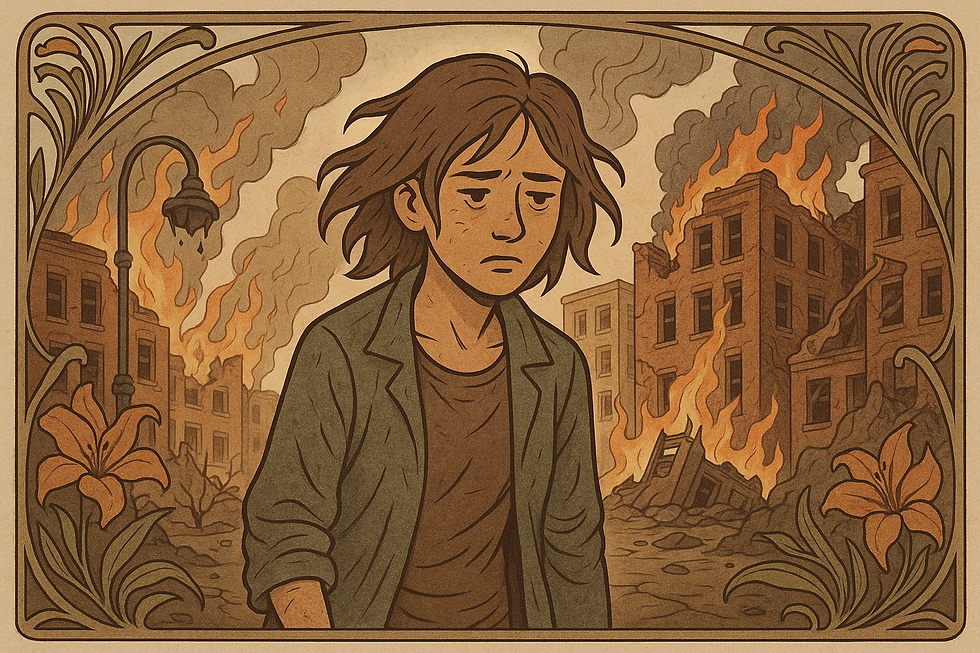
People call it resilience when I survive what they refuse to prevent. They call it perseverance when I keep walking through hazards they insist are invisible. They call it misfortune when the pattern has a shape.
The lesson taught to my body arrives without philosophy: safety stays contingent. Security stays temporary. Jeopardy stays ordinary. The world remains capable of taking everything again, and it keeps demonstrating that capability with a patient, methodical cruelty.
Even a lucky break carries no promise of permanence or security. It offers a fleeting altitude without a solid foundation, a temporary elevation that can be exhilarating yet precarious. In this moment of unexpected fortune, I am granted a tantalizing view of what I could potentially achieve, a glimpse into a future filled with opportunities and success. However, this glimpse is bittersweet, as it serves as a stark reminder that such fortune can be just as easily revoked as it was bestowed. The whims of fate can shift dramatically, leaving me to navigate the choppy waters of uncertainty.
Luck, while it may seem like a golden ticket, does not repair the underlying truth that my life can be destabilized at any moment by the actions and decisions of others. The pride of those in positions of power can create barriers that feel insurmountable, while the laziness of individuals who should be contributing can lead to missed opportunities and unfulfilled potential. Indifference, whether from peers or institutions, can foster an environment where my achievements are overlooked or dismissed, making even the most fortunate breaks seem hollow and untrustworthy.
Moreover, the self-protective instincts of institutions—those very structures that are supposed to support and uplift individuals—can often lead to a culture of exclusion and gatekeeping. This institutional self-protection can manifest in various ways, such as bureaucratic red tape, favoritism, or a lack of accountability, all of which can undermine the very essence of any lucky break I might experience. Thus, while the initial thrill of fortune may elevate my spirits, it is crucial to recognize that this elevation is precarious and can be swept away by the tides of external circumstances and the actions of others.

Luck offers altitude without foundation. Luck grants a view and withdraws its guarantee in the same breath. A lucky break changes a day. It does not repair the underlying truth that my life can be destabilized by other people’s pride, laziness, indifference, and institutional self-protection. The structures that claim neutrality protect themselves first. They convert harm into “process.” They convert obligation into “discretion.”
This produces a particular kind of terror: the terror of living without a floor. Not a dramatic fear. A constant one. A quiet pressure that turns every plan into a gamble and every hope into an invitation for loss.
My crisis sits inside that fact.
Fairness gives the world moral texture. Fairness makes a future intelligible. Fairness makes self-respect practical. Fairness allows a person to consent to being vulnerable in public life because that vulnerability lands inside shared restraint.
A universe where care operates as a reward for the chosen—distributed by private whim while the rest unravel—destroys the conditions for trust. It turns survival into a popularity contest and calls the winners virtuous.
I stand in an impossible bind. Survival requires participation in systems that run on disregard. Dignity requires refusal to cooperate with my own erasure. Every path extracts something: time, health, belief, self-respect. Each request for help risks becoming another lesson in abandonment.
My condition is simple. I am capable. I worked. I built. The world met me with doors that do not open for people like me, and with voices that say “fairness” while meaning “endurance.”
I remain here, bottomed out, through the steady force of other people’s power—power exercised casually, with paperwork, with pride, with the certainty that my life can absorb the cost.

Thick Thought Thumper----> "A Poem Of Force”
A spoken reading of Simone Weil’s essay The Iliad, or the Poem of Force set inside an original soundscape. Weil tracks the gravity of violence: how force bends bodies, distorts attention, and turns human life into matter—sometimes in an instant, sometimes by slow pressure. The music follows that pressure: steady, intimate, and unsentimental. Listening note Headphones recommended. Volume set to medium: the voice sits close to the mix. Credits Text: Simone Weil, The Iliad, or the Poem of Force (1940) Reading / Music / Production: Dick Gariepy (Big Thinky Ouchey)
The Realities of Fairness: Navigating Facticity in an Unequal World
The Realities of Fairness: Navigating Facticity in an Unequal World


Comments