Hope Is Not a Plan: When “Just Be Hopeful” Does More Harm than Good
- Dick Gariepy
- Sep 24, 2025
- 13 min read

Dick Gariepy | Big Thinky Ouchey
Asking me to trust that things will get better when i have no other viable options above survival threshold is not helping, its abandonment

I am currently homeless, living in a makeshift encampment in some spooky haunted woods within Calgary. This happened after what I can only describe as a cascade of failures of institutions who held my wellbeing in their hands and chose to exploit it instead of care for it. I was speaking with a friend who lives in the U.S who advised me “Don’t give up. Just stay hopeful things will turn around!” I forced a polite smile and nodded. Inside, though, a sarcastic thought escaped: Ah yes, my empty gas tank and job prospects will surely refill themselves with the power of positive thinking. It wasn’t that I disliked hope, far from it. But being told to “just be hopeful” felt like being handed a balloon when I needed a life vest. This absurdity would be almost funny if it weren’t so damaging. In this post, I want to unpack why these hopeful platitudes , the “hang in there, it’ll get better” refrains we often offer people in ongoing crisis, are not just unhelpful but actively harmful when they come without any concrete reason to back them up. I’ll argue that hope must be built through evidence-based action and tangible support, not demanded as a moral performance from those drowning in hardship. In other words, if you’re not prepared to do something to make someone’s situation better, telling them to be hopeful is at best hollow and at worst cruel.
Hope Without Reasons: The Folly of Forcing Optimism

Let’s start with a basic philosophical insight: hope is not something you can simply will into existence on command. When someone urges “Don’t lose hope!” to a person in chronic crisis (be it homelessness, illness, or any ongoing struggle), they’re effectively asking that person to believe, to trust that a better future is coming, without offering any evidence or pathway to make it plausible. That is a tall order. As philosopher Adam Kadlac (2017) explains, being truly hopeful isn’t just a general mood you can switch on; it means “nurtur[ing] a specific hope, namely, the hope that the future will be good” (Kadlac, 2017, p. 210). In other words, hopefulness requires some content, some vision of a good outcome, that one can reasonably cling to. Telling someone in deep crisis to be hopeful without giving them any specific reason to hope (like a job lead, a housing opportunity, a medical treatment, something concrete) is essentially instructing them to conjure faith in a good future out of thin air. It’s asking for an empty, baseless hope, which isn’t really hopefulness at all by Kadlac’s definition. It’s more like asking them to perform a kind of cheerfulness or blind optimism that has no object, what Kadlac would call a trait of “openness to the future” divorced from particular hopes. And if that sounds a bit like wishful thinking or even self-delusion, well, it is.
Crucially, belief in a better future (which is what hope entails) can’t be forced by sheer encouragement or command. Philosophers have a term for attempts to force belief: doxastic coercion, meaning coercing someone’s doxastic state (their beliefs). Benjamin McMyler (2007) argues that unlike actions, beliefs cannot be directly coerced by threats or commands. You can threaten me to hand over my wallet and likely succeed, but you can’t threaten me into genuinely believing you’re the King of England. Why? Because belief responds to evidence and reasons, not pressure. At best, coercion might make someone pretend to believe or try to believe, but it won’t create a real, truth-grounded conviction. Hope, understood as a kind of belief or expectation that good things will happen, works the same way. Telling a person in crisis to “just have hope” is like commanding them to believe in a positive outcome without giving them one shred of rational justification for that belief. It’s not only futile (you can’t flip a mental switch to go from despair to authentic hope on demand), it’s also potentially damaging to their psyche. If they can’t simply comply and feel hopeful (because reality is screaming otherwise), they may end up feeling even worse , now on top of suffering, they feel guilty for “failing” to be optimistic. In effect, the cheery exhortation becomes a thinly veiled moral command: Be hopeful, or else, or else you’re letting everyone down, or else you’re a negative person, or else you’ve “given up.” This is why such platitudes often carry a sting. They imply that if hope isn’t springing eternal inside you, the fault lies with you, not with the atrocious hand you’ve been dealt or the world that dealt it.
The irrationality of baseless hope is also worth dissecting. Often the subtext of “Things will get better, just don’t quit!” is that some stroke of luck or fate will eventually turn the tide. But living on a hope with no evidence is tantamount to expecting luck to save the day. Philosopher Will Barrett (2006) would warn us that “projecting luck” into the future is not a rational strategy at all. In his analysis of decision-making, Barrett argues that past lucky breaks do not provide any rational grounds to expect future lucky events, and believing that one is “due” for good luck leads to bad decisions (Barrett, 2006). In plainer terms, no one is reliably lucky, so banking on “something good will just happen if I stay positive” is wishful thinking, not a plan. Telling a person in crisis to remain hopeful with no realistic basis is essentially encouraging them to bet their emotional energy on a long shot , and if that bet fails, the crash will only worsen the despair. Hope is precious, yes, but false hope is cruel. It sets people up for disappointment and self-blame (“Maybe I just didn’t hope hard enough”).
Abstract Platitudes vs. Concrete Hope: Bloch’s Utopia Lesson

The emptiness of unguided hope was insightfully captured by philosopher Ernst Bloch, who distinguished between what he called “abstract” vs. “concrete” utopia , essentially, between fantasy and attainable hope. Abstract utopia is the kind of wishful dreaming that is “fantastic and compensatory. It is wishful thinking, but the wish is not accompanied by a will to change anything” (Levitas, 1990, p. 15). It’s the daydream of magically winning the lottery or imagining that somehow, someday, your problems will vanish without any realistic path to that outcome. As Ruth Levitas (1990) explains in her analysis of Bloch, abstract utopian imaginings might provide momentary emotional escape, but they “get lost in an Empty-Possible” , a vision of the future that “could never be effected” in reality. Sound familiar? “Hang in there, something will come along” often amounts to inviting someone to live in an abstract utopia, a comforting fantasy that doesn’t require anyone (least of all the speaker of the platitude) to actually do anything.
In contrast, Bloch championed concrete utopia, which is essentially educated hope. A concrete utopian hope is “anticipatory rather than compensatory” , it reaches forward to a future that is actually possible and commits to working toward it (Levitas, 1990). Bloch describes it as “not merely wishful but will-full thinking”, encapsulated by the resolve that “it should be so, it must become so”. In Bloch’s terms, “only concrete utopia carries hope”, because it is tied to real-world possibility and active effort. Abstract utopia, by contrast, might express a vague desire for better days, but it doesn’t carry hope in any actionable sense , it’s a passive fantasy.
Now think about the typical upbeat slogans we offer to people in dire straits: keep the faith, it’ll get better, don’t give up. By themselves, these are abstract utopias in Bloch’s sense. They imply a better future without indicating how or why such a future might come about. They offer comfort in the form of a vague promise , essentially saying “imagine a nicer tomorrow” , but offer no help in getting there. In fact, Bloch would likely say these platitudes **lack true hope, because true hope (“educated hope”) requires a “methodical organ for the New”, a deliberate method or action towards change. When we inundate people with positive vibes without backing it up, we’re giving them abstract hope , and abstract hope, unmoored from reality, can actually discourage concrete action. If all the emphasis is on attitude (“just stay optimistic!”), both the suffering individual and the people around them might neglect the material steps needed to improve the situation. It’s as if we expect the universe to reward a positive mindset by itself. That is magical thinking, and it’s no substitute for supportive doing.
The Moral Performance of Hope: Blame and Burden-Shifting

There’s an insidious interpersonal dynamic that often underlies the “just be hopeful” trope. Who is really comforted by these platitudes , the person in crisis, or the person offering them? Frequently, such phrases are a reflex of the speaker’s discomfort. When we see someone in prolonged crisis (homelessness, unemployment, chronic illness, etc.), we feel awkward, helpless, maybe guilty that we can’t easily fix it. So we grasp for something, anything, to say that sounds positive. “Don’t worry, you’ll get through this, I just know it!” It eases our anxiety to believe in a happy ending; it lets us walk away feeling we did something uplifting. But for the person on the receiving end, this can feel like a subtle slap in the face. It diminishes their reality , actually, I am worried that I won’t get through this, and your confidence has no basis in the facts of my situation.
In effect, the demand to exhibit hope becomes a form of moral performance for the suffering. They’re expected to smile and say “I won’t give up!” to reassure everyone else, or else risk social censure for being “negative” or “defeatist.” This is profoundly unfair. It shifts the emotional burden onto the very person least equipped to bear it. Instead of us, the bystanders or friends or officials, taking on the burden of helping, the onus shifts to the sufferer to appear hopeful enough to make us comfortable. Philosopher Bernard Williams noted that people often speak of “external reasons” , moral reasons that exist regardless of an individual’s own motivations (Williams, 1979). Dean Lubin (2009) gives a simple example: “the fact that someone is in need of help is, by itself, a reason to help him” (Lubin, 2009, p.274). In other words, your homelessness is my reason (indeed obligation) to assist. Yet platitudes invert this logic: they treat the person’s need not as a call for external action, but as an occasion to demand an internal change in the person’s attitude. The moral script gets flipped. The focus moves from our duty to help to their supposed duty to stay positive. This inversion is a convenient cop-out , it absolves others of responsibility. If the person loses hope or gets depressed, then their continued misfortune can be chalked up to a personal failure of optimism, rather than a collective failure to provide support.
This blame-shifting aspect of enforced hope is particularly evident in social policy and public rhetoric. Think of slogans about “resilience” and “grit” that we often direct at disadvantaged communities. Praising someone’s resilience is fine, but overemphasizing resilience can imply that people should withstand endless adversity without demanding systemic change. It’s a short step from “you can do it!” to “if you couldn’t do it, you must not have tried hard enough.” This is reminiscent of what philosopher Mark Navin (2011) observes about oppression: outsiders often cannot fathom the structural traps that keep people down, and thus they over-attribute outcomes to personal choice or willpower (Navin, 2011). In reality, someone might make every hopeful effort to improve their lot and still be thwarted by factors outside their control , job discrimination, unaffordable housing, health crises, you name it. By demanding hope as a constant display, we risk implying that any lapse or frustration is a moral flaw. It’s the classic moral double bind: suffer in silence with a smile, or be judged for your despair.
Furthermore, enforcing optimistic thinking can backfire psychologically. Mental health research has shown that forced positive thinking can invalidate people’s genuine emotions and lead to a sense of alienation, you start feeling something is wrong with you for feeling bad, which piles a secondary problem on the primary one. Authentic hope can be empowering, but inauthentic hope , hope that one feels obliged to show but doesn’t truly feel , is essentially a performance of fake emotion. It does nothing to solve the person’s problems and may even prevent them from seeking real solutions (because admitting struggle might be seen as “giving up hope”). In short, demanding a veneer of hope hurts the very people it’s supposedly meant to inspire.
When Hope Substitutes for Help: Policy Abdication
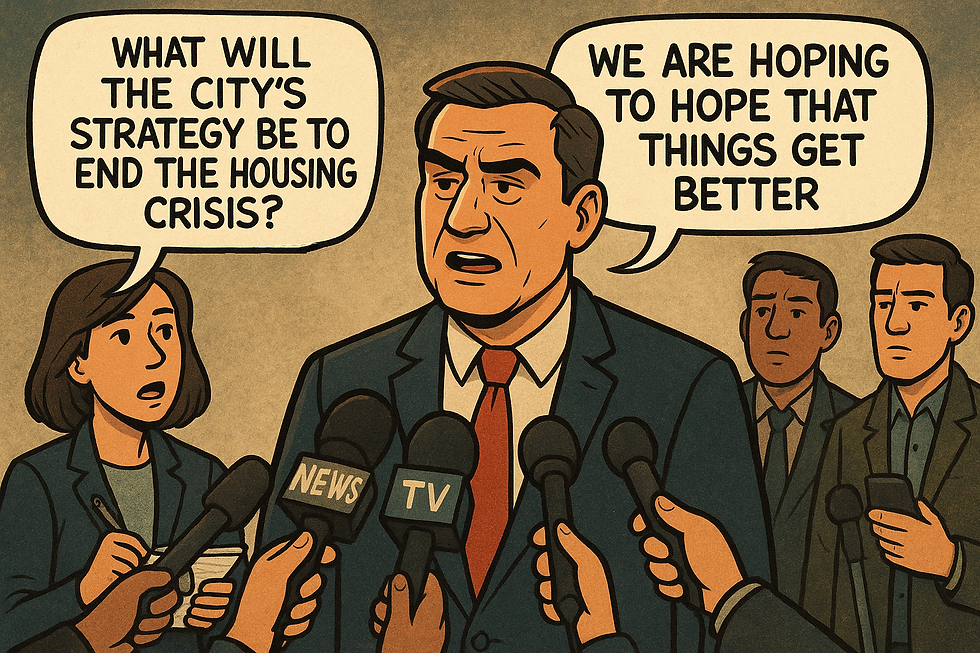
The harm of content-free hope rhetoric becomes starkly clear when we zoom out to the level of policy and social support. Hopeful slogans without follow-through are not just an interpersonal flaw; they reflect and enable a broader failure of policy. If you listen carefully, you’ll notice politicians and leaders often lean on the language of hope to paper over inaction. For example, a city might respond to rising homelessness by launching a campaign celebrating “resilient communities” and encouraging unhoused people to “never lose hope,” all while quietly slashing budgets for housing programs. It's a cheap substitute for services.
From a public policy perspective, this is an abdication of responsibility. As Faraaz Mahomed and colleagues argue from a human rights angle, the persistent underinvestment in mental health and social support is a glaring failure that no amount of positive rhetoric can mask. Around the world, mental health and well-being remain “a neglected priority, low on the agenda of policy makers and funders” (Mahomed, 2020, p.35). This chronic neglect leaves people without care, resources, or safety nets. Telling them to be hopeful in that context is, frankly, a cruel joke. It’s like defunding the fire department and then encouraging people whose houses are burning to “stay strong and optimistic.” Mahomed (2020) notes that this policy neglect is not just unfortunate , it’s unacceptable from a human rights perspective. Governments have obligations to allocate “maximum available resources” to health and social support (per international agreements) and to treat these issues as fundamental rights, not optional charity. Demanding hope from unsupported individuals turns the rights-based approach on its head.
History gives us instructive examples. In the mid-20th century, when the U.S. moved to deinstitutionalize mental health care, federal policymakers didn’t just spread hopeful ideas about community care and then sit back. Janet Weiss’s study of that era (1946, 1963) shows they combined inspiring ideas with material inducements , grants, funding for local clinics, training programs, etc. , to actually make it happen (Weiss, 1990). Ideas alone wouldn’t have cut it: “Without new resources, many actors felt stuck in existing patterns of practice”, Weiss notes, even though the idea of community care had them convinced it was the right direction (Weiss, 1990, p.196). It was the injection of resources, however modest, that “permitted the changes in service delivery to be launched” (Weiss, 1990, p.196). The takeaway here is powerful: hopeful vision had to be married to concrete investment. Neither alone would have transformed the system. By analogy, if we want individuals in crisis to have hope, the community and policymakers must furnish the inducements , the jobs programs, the housing vouchers, the counseling services, the legal aid , that give credible reason for hope. Hope has to be manufactured, collaboratively, through action and support. It cannot just be demanded of those who have been left with nothing.
In our current landscape, unfortunately, the balance is often skewed the other way. There’s plenty of lip service to hope and resilience, but far less political will to put money and effort into solving the root problems. The result is that optimistic rhetoric fills the void where robust policy should be. This isn’t a new trick: it’s a lot easier (and cheaper) to urge people to keep their chin up than to, say, build affordable housing or ensure accessible mental health care. But it’s a short-sighted approach that ultimately costs more , in broken lives, in social instability, in moral failing.
I’m hopeful that someone will give me a reason to be hopeful

I’m not anti-hope. I’m anti-weaponized hope, hope used as a stand-in for help or as a stick to blame the already bludgeoned. Real hope is a lifeline, but it survives on validation: small, credible signals that effort won’t be wasted. That kind of hope can be cultivated by other people, but only with actions, plans, resources, advocacy, not pep.
If you want someone to feel hope, furnish grounds for it. Draft a plan with me. Connect me to a human who can say yes. Make the call, send the email, stay on the line until a person answers. In short: manufacture hope through verifiable support.
What must never happen is treating hope like a moral duty of the downtrodden. Hope ought to be the result of feeling supported, not the entry fee to receive support. Demanding optimism from someone in crisis is like demanding a patient recover by attitude while we hold back the medicine, backwards and, even when well-meant, cruel in effect.
My turn hasn’t come yet. I’m still homeless, and I’m not seeing reasons to believe that will change. That isn’t melodrama; it’s a status report. The evidence I’ve been given so far points to more of the same, and hope follows evidence. The sugary slogans haven’t helped, unless you count a thicker rind of cynicism as help.
Here’s the deadpan rule of thumb: bite your tongue unless you can back it up. Swap “Don’t give up, it’ll get better” for “What helps right now?” and “How can I support you?” Even small acts, buying a meal, making a call, taking on the admin, showing up to an appointment, outperform any inspirational quote.
Bottom line: hope is a shared resource, but it comes due in the currency of actionable hope. Those with capacity have a role in making hope reasonable: case numbers, dates, receipts, handoffs. Stop outsourcing the burden of hope to those least equipped to carry it. Replace idle platitudes with active solidarity. Then, if I ever do manage a smile, it won’t be performance, it will be because we built a real reason to.
Thick Thought Thumper of the week ----> "After The Beep"
References (APA 7th edition)
Barrett, W. (2006). Luck and decision. Journal of Applied Philosophy, 23(1), 73, 87. https://doi.org/10.1111/j.1468-5930.2006.00321.x
Bloch, E. (1986). The Principle of Hope (N. Plaice, S. Plaice, & P. Knight, Trans.). MIT Press. (Original work published 1954-1959) , Referenced via Levitas (1990) on Bloch’s concepts of abstract vs. concrete utopia
Kadlac, A. (2017). Hope(s) and hopefulness. American Philosophical Quarterly, 54(3), 209, 221.
Levitas, R. (1990). Educated hope: Ernst Bloch on abstract and concrete utopia. Utopian Studies, 1(2), 13, 26.
Lubin, D. (2009). External reasons. Metaphilosophy, 40(2), 273, 291.
Mahomed, F. et al. (2020). Addressing the problem of severe underinvestment in mental health and well-being from a human rights perspective. Health and Human Rights, 22(1), 35, 50.
McMyler, B. (2011). Doxastic coercion: The limits of moral authority. The Philosophical Quarterly, 61(244), 337, 357. (Discussion of belief coercion; original ideas referenced in text are from McMyler’s analysis).
Navin, M. (2011). Luck and oppression. Ethical Theory and Moral Practice, 14(5), 533, 547.
Weiss, J. (1990). Ideas and inducements in mental health policy. Journal of Policy Analysis and Management, 9(2), 178, 200.
Hope Is Not a Plan
Hope Is Not a Plan


Comments